
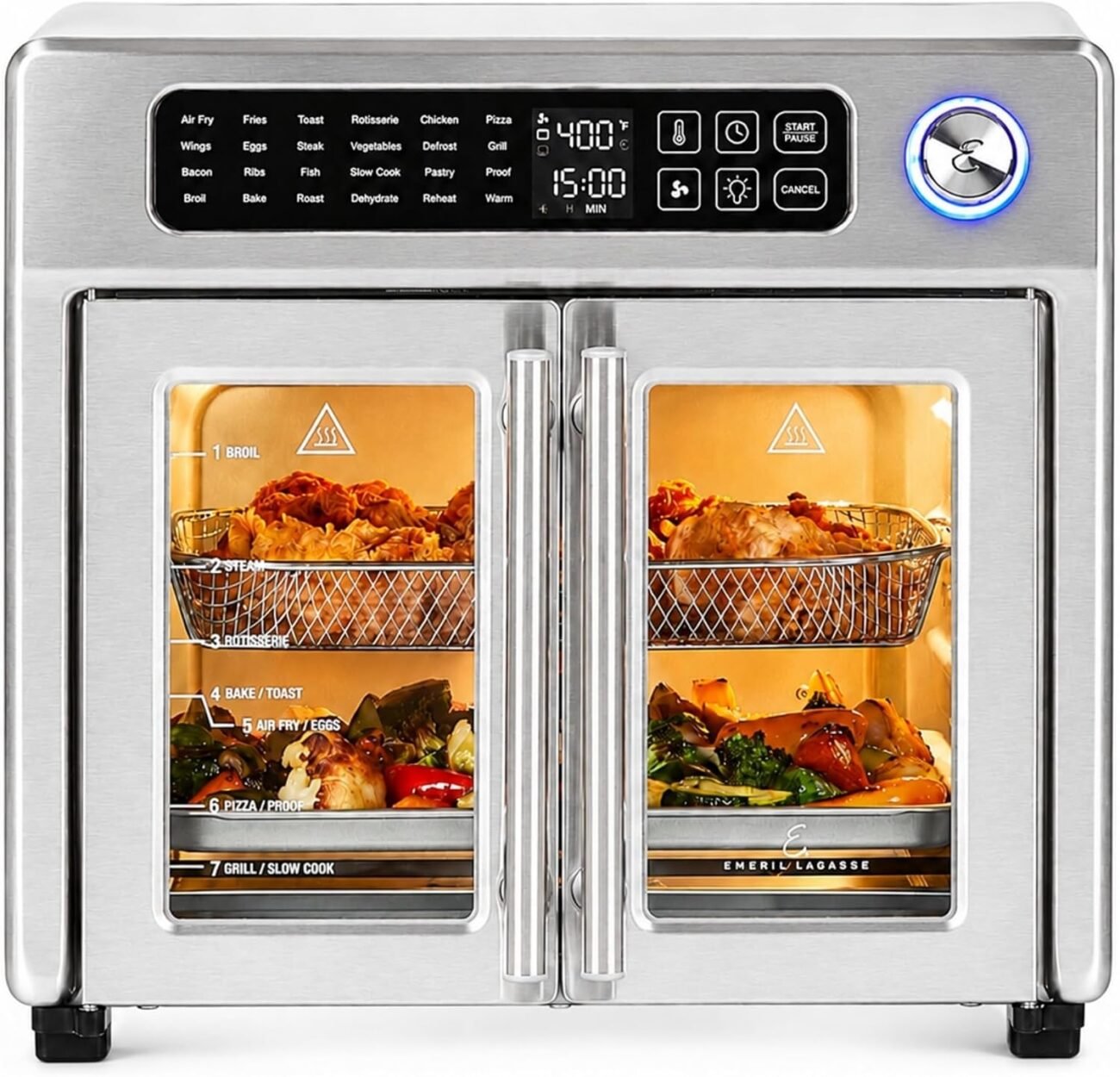
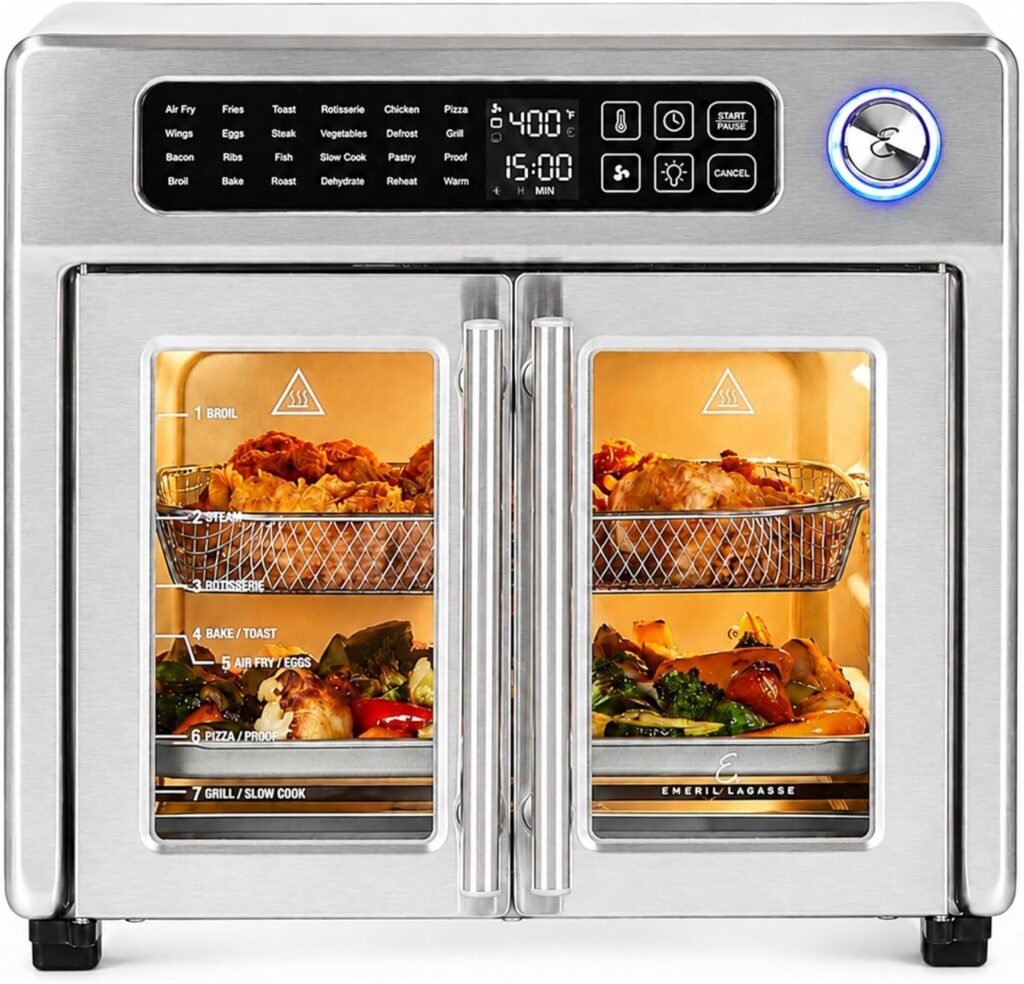
Emeril Lagasse 26QT French Door Multi‑Function Air Fryer Toaster Oven
Introduction
The Emeril Lagasse 26QT French Door Multi‑Function Air Fryer Toaster Oven appears on the market as a large, versatile kitchen appliance that combines several cooking methods into a single unit. The product name itself conveys a number of key attributes: a 26‑quart capacity, a French‑door design, and the ability to perform multiple functions such as air frying, toasting, baking, and possibly more. While the title offers a clear snapshot of what the appliance is marketed as, the available data does not provide any concrete specifications, dimensions, or performance metrics. Consequently, this review focuses on what can be inferred from the product title, general considerations for appliances of this type, and practical advice for potential buyers who may be exploring similar options.
Product Overview
Based solely on the product title, the appliance is positioned as a large‑capacity, multi‑functional unit that is intended to replace several individual kitchen gadgets. The mention of a French‑door configuration suggests a design that may allow for easy access to the interior and a more traditional aesthetic. The inclusion of “air fryer” indicates that the appliance likely incorporates rapid air circulation technology, which is commonly used for healthier cooking by reducing the need for added oils. The term “toaster oven” implies that it can perform conventional toasting and baking tasks, while “multi‑function” suggests that additional cooking modes may be available, such as broiling, roasting, or dehydrating.
Because the extracted data does not confirm any of these attributes, buyers should verify that the appliance indeed offers the claimed functions before making a purchase. The title alone does not provide information about the appliance’s power rating, heating element type, temperature range, or safety features such as automatic shut‑off or child‑lock mechanisms. It also does not disclose the materials used for the interior and exterior surfaces, which can affect durability and ease of cleaning.
In summary, the product title presents a broad set of expectations, but the absence of detailed information means that potential customers must seek additional sources—such as manufacturer specifications, user manuals, or third‑party reviews—to confirm the actual capabilities of the appliance.
Potential Features (Cautiously Discussed)
While the title implies a range of features, the lack of explicit data requires a cautious approach. The following points outline typical features that are often associated with appliances described as “26QT French Door Multi‑Function Air Fryer Toaster Oven.” These points are presented as general industry observations rather than confirmed attributes of this specific product.
- Large Capacity: A 26‑quart volume would allow the cooking of sizable meals, such as whole chickens, large roasts, or multiple trays of pastries. It also facilitates batch cooking for families or gatherings.
- French‑Door Design: This style usually offers a wide opening for easy loading and unloading, and may provide a more kitchen‑friendly appearance.
- Air Frying Capability: Air‑frying technology typically uses a fan to circulate hot air, producing a crisp exterior while retaining moisture inside. This method is often marketed as a healthier alternative to deep frying.
- Toasting and Baking Functions: Conventional toaster oven functions include toasting bread, baking cookies, or reheating leftovers. The presence of a bake setting is common in multi‑function ovens.
- Additional Cooking Modes: Many appliances in this category offer broil, roast, or dehydrator settings, allowing users to experiment with various cooking techniques.
- Temperature Control: Accurate temperature regulation is essential for consistent results across different cooking modes.
- Timer and Auto‑Shutdown: A built‑in timer and automatic shut‑off feature enhance safety and convenience.
- Easy‑to‑Clean Interior: Non‑stick or stainless‑steel interiors are often highlighted for their resistance to food residue and ease of cleaning.
It is important to emphasize that these features are not confirmed for the specific product in question. Buyers should consult official documentation or reputable sources to verify which of these attributes are actually present.
Potential Practical Benefits (Cautiously Discussed)
Assuming that the appliance delivers on the functions suggested by its title, there are several practical benefits that users might experience. These benefits are derived from the typical advantages associated with large, multi‑functional kitchen appliances and are presented as possibilities rather than guaranteed outcomes.
- Space Efficiency: Combining multiple cooking methods into a single unit can reduce countertop clutter and free up storage space for other kitchen tools.
- Time Savings: The ability to perform several cooking tasks—such as air frying, baking, and toasting—without switching between separate appliances can streamline meal preparation.
- Energy Efficiency: Using one appliance for multiple cooking tasks may consume less energy than operating several separate devices simultaneously.
- Healthier Cooking Options: Air frying typically requires less oil than traditional frying, potentially resulting in lower fat content in cooked foods.
- Versatility: A multi‑function appliance can accommodate a wide range of recipes, from simple toast to complex roasted dishes, making it suitable for diverse culinary preferences.
- Convenience for Families: The large capacity can handle meals for multiple people, which is advantageous for family gatherings or meal prepping.
- Ease of Use: Many modern appliances feature intuitive controls, preset cooking modes, and clear temperature settings, which can simplify the cooking process for users of all skill levels.
- Potential Cost Savings: Purchasing a single appliance that replaces several others may reduce upfront costs and long‑term maintenance expenses.
These benefits are contingent upon the appliance actually offering the functions implied by its name. Prospective buyers should verify the presence and quality of each feature before making a decision.
Limitations and Unknowns
Given the absence of detailed product information, several limitations and unknowns remain. These uncertainties should be considered carefully by anyone evaluating this appliance.
- Specification Gaps: Key specifications such as power consumption, heating element type, temperature range, and dimensions are not available. Without these details, it is difficult to assess the appliance’s suitability for specific kitchen layouts or energy budgets.
- Material and Build Quality: Information about the materials used for the interior and exterior surfaces, as well as the overall construction quality, is missing. This makes it hard to predict durability, resistance to wear, and cleaning requirements.
- Safety Features: The presence of safety mechanisms—such as automatic shut‑off, child‑lock, or heat‑resistant handles—is unknown. These features are important for ensuring safe operation, especially in households with children or pets.
- Performance Metrics: Data on cooking performance, such as how evenly the appliance distributes heat or how quickly it reaches target temperatures, is not provided. This information is essential for evaluating the appliance’s effectiveness for different cooking tasks.
- Warranty and Support: Details regarding warranty coverage, repair services, or customer support are not disclosed. Knowing the level of post‑purchase support can influence purchasing confidence.
- User Experience: No user reviews, ratings, or testimonials are available to give insight into real‑world performance, reliability, or potential issues that users may encounter.
- Regulatory Compliance: Certifications related to electrical safety, food contact materials, or environmental standards are not mentioned. Compliance with relevant regulations can affect product safety and market availability.
Because these gaps exist, potential buyers should seek additional information from reliable sources—such as the manufacturer’s official website, product manuals, or trusted third‑party review sites—before proceeding with a purchase.
Suitable Use Cases (Conditionally Framed)
Assuming the appliance functions as suggested by its title, it could be suitable for several cooking scenarios. The following use cases are presented as conditional possibilities based on typical features of large, multi‑functional ovens and should be verified against the actual product specifications.
- Family Meal Preparation: The 26‑quart capacity could accommodate large meals for families or small gatherings, allowing users to cook a main dish and side dishes simultaneously.
- Batch Cooking and Meal Prep: Users who prepare meals in advance for the week could benefit from the appliance’s ability to cook multiple items at once, reducing overall cooking time.
- Health‑Focused Cooking: Those interested in healthier cooking methods might use the air‑frying function to produce crispy foods with less oil.
- Versatile Baking: The toaster oven component could be used for baking cookies, pastries, or reheating leftovers, providing flexibility for different baking needs.
- Space‑Saving Kitchens: In kitchens with limited countertop or storage space, a single appliance that replaces several separate devices could be advantageous.
- Entertaining: The large capacity and multi‑functionality may support cooking for small parties or events, where a variety of dishes are prepared in a single appliance.
- Home Cooking Enthusiasts: Users who enjoy experimenting with different cooking techniques might find the combination of air frying, baking, and toasting appealing.
These use cases are speculative and should be evaluated against confirmed product features and performance data once they become available.
Buying Considerations
When evaluating a large, multi‑functional kitchen appliance such as the Emeril Lagasse 26QT French Door Multi‑Function Air Fryer Toaster Oven, buyers should adopt a systematic approach to ensure that the product meets their needs and expectations. The following considerations are intended as general guidance rather than definitive advice.
- Confirm Core Specifications: Verify the appliance’s capacity, power rating, temperature range, and dimensions. These details are critical for ensuring that the unit fits in the intended kitchen space and can handle the desired cooking tasks.
- Assess Functionality: Confirm that the appliance truly offers the functions implied by its title—air frying, toasting, baking, and any additional modes. Check for the presence of preset cooking programs, manual controls, and the ability to adjust temperature and time settings.
- Evaluate Build Quality: Look for information on the materials used for the interior and exterior surfaces, as well as the overall construction. High‑quality materials can enhance durability and ease of cleaning.
- Check Safety Features: Ensure that the appliance includes essential safety mechanisms such as automatic shut‑off, child‑lock, and heat‑resistant handles. These features contribute to safe operation, especially in households with children or pets.
- Review Warranty and Support: Determine the length and scope of the warranty, as well as the availability of repair services and customer support. A robust warranty can provide peace of mind and reduce long‑term maintenance costs.
- Consider Energy Consumption: Evaluate the appliance’s power consumption and compare it to similar models. Lower energy usage can translate into cost savings over time.
- Read Independent Reviews: Seek out third‑party reviews or user testimonials that discuss real‑world performance, reliability, and potential issues. Independent reviews can offer insights that are not present in manufacturer marketing materials.
- Verify Regulatory Compliance: Confirm that the appliance meets relevant safety, food contact, and environmental regulations. Certifications can be an indicator of product quality and safety.
- Compare Alternatives: Examine other appliances in the same category to determine whether the product offers competitive features, performance, and value. Comparative analysis can help identify the best fit for specific needs.
- Assess Return Policy: Understand the retailer’s return policy in case the appliance does not meet expectations or has defects. A flexible return policy can mitigate purchasing risk.
By systematically addressing these considerations, buyers can make a more informed decision and reduce the likelihood of post‑purchase dissatisfaction.
Conclusion
The Emeril Lagasse 26QT French Door Multi‑Function Air Fryer Toaster Oven presents an intriguing proposition for consumers seeking a single appliance that combines large capacity, air‑frying technology, and traditional toaster oven functions. However, the lack of detailed specifications, performance data, and user feedback means that potential buyers must conduct thorough research before committing to a purchase. Key areas for further investigation include confirming core specifications, verifying the presence of advertised functions, assessing build quality and safety features, and reviewing independent user experiences. By approaching the decision with careful scrutiny and by seeking reliable information from reputable sources, consumers can determine whether this appliance aligns with their cooking needs, kitchen space constraints, and budgetary considerations.

